
Training Week of July 20: A Deload Week, Skipped Tests, and 868m Up Mt. Seymour
After the fatigue hole I dug the week before — 12.8 hours and a TSB of -31.7 — this was the week the plan pulled the reins. A recovery week: an easy Z2 ride, short and social running, a rest day I actually took, and the two formal fitness tests on the schedule quietly skipped. Then, on Sunday, I threw all of that restraint out and rode the Cypress Challenge — 868m of climbing up Mt. Seymour for pancreatic cancer research. It still points at Ironman 70.3 Washington Tri-Cities, the race where I finished 15th in my age group last year and where the goal this time is to go faster and earn a slot to the Ironman 70.3 World Championship.
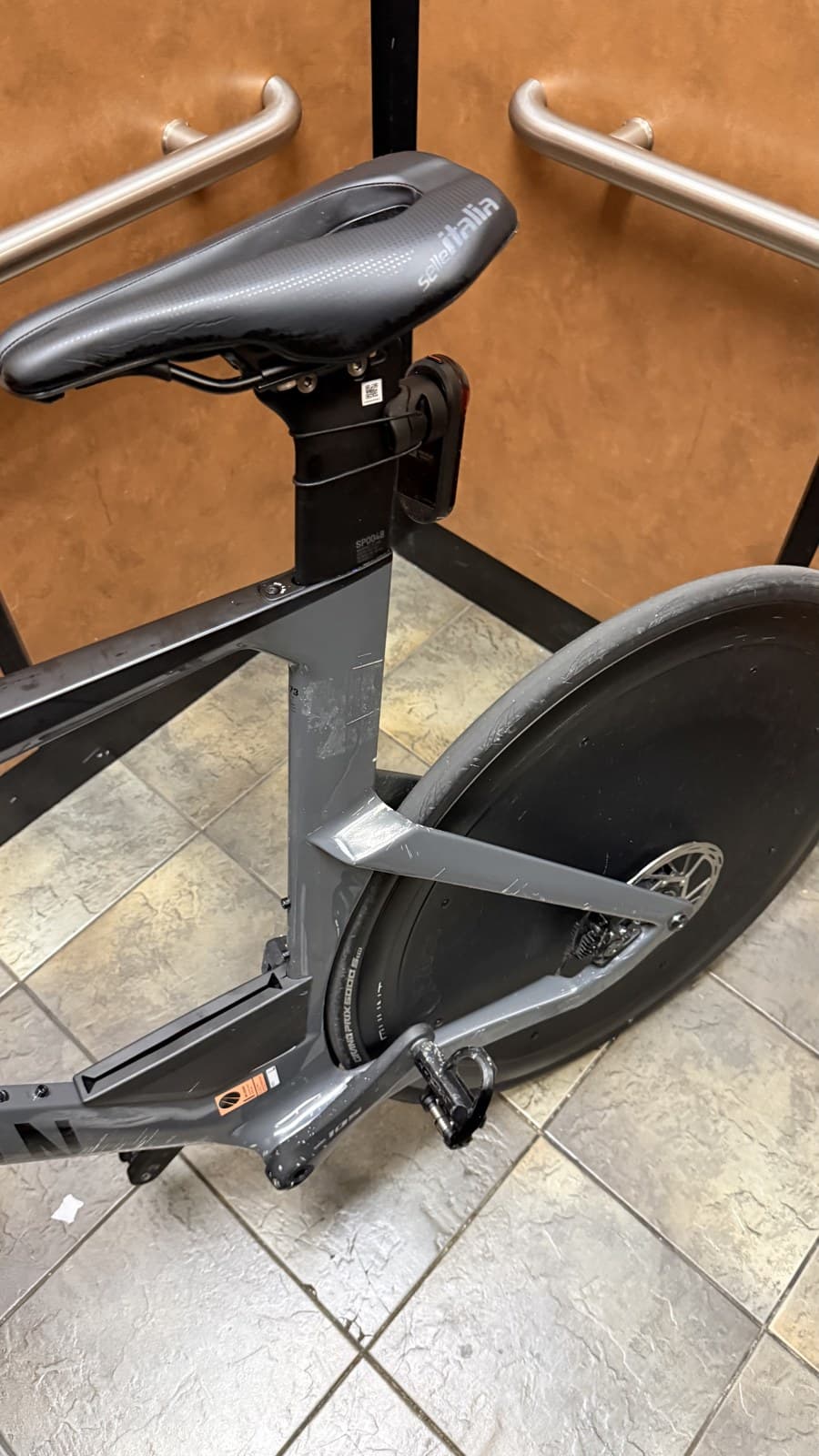
The EZ Gains disc cover finally on the Canyon — last week it was still an unspent lever sitting in my apartment.
Where this week fits
I'm still on My Pro Coach's Advanced Half-Distance Training plan on TrainingPeaks — the same program I followed into this exact race last year. After the deepest fatigue week of the build, this one was written as a recovery week, and the tell was in the notes: Tuesday's run was labelled "Recovery week," Thursday's ride said "easy/steady Z2 today, save your legs for next week," and Wednesday was a scheduled rest day. It was also a testing week in the plan — there was a run fitness test, a swim CSS test, and a bike threshold test on the schedule. I skipped the first two. The third one I did in the least controlled way possible: I rode it up a mountain.
Bike: an easy Thursday, and a very hard Sunday
Thursday was the recovery ride — an Aerobic Endurance Ride on the plan, two hours of steady Z2 with an explicit instruction to save the legs. It came in at 58.4km in 1:59:35 at 29.3 km/h with 394m of climbing, 82.8 TSS against a planned 87.1. This was the tri bike, forearms on the aerobars for most of it — the one ride this week where the aero upgrades I bought this season actually matter. My note on Strava was that I had "only 2 scares from bad drivers, which is a good number," which tells you roughly how the riding around here goes. Nothing hard, nothing to report — exactly what a recovery ride is supposed to be.
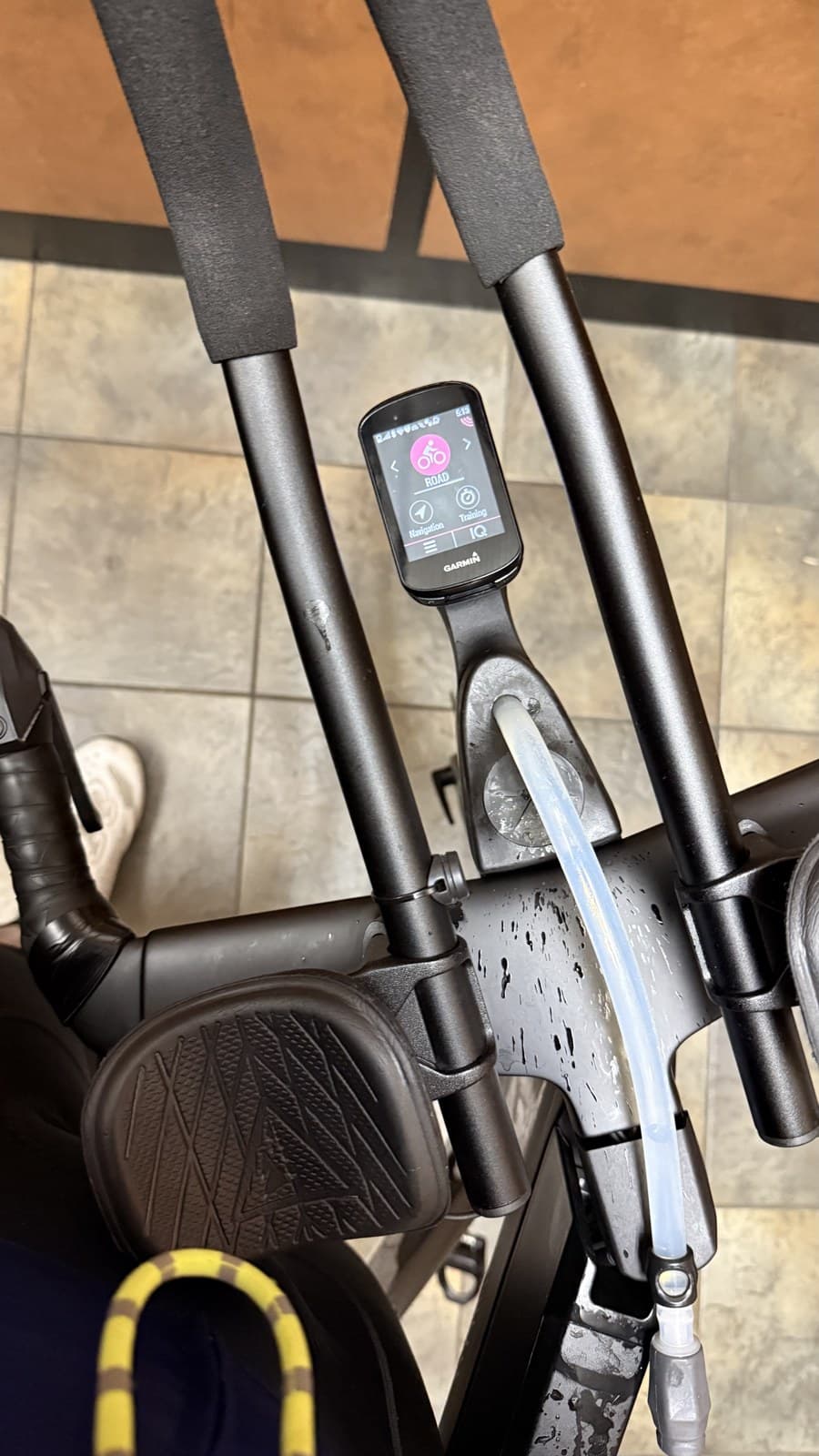
The tri-bike cockpit dialled in — aerobars, Garmin, and the hydration setup ready for the flat, fast weeks ahead.
Sunday was the opposite of easy. The Cypress Challenge is a charity hill climb — this year run up Mt. Seymour — raising money for pancreatic cancer research through BC Cancer. On the plan it was slotted as the block's threshold test: a warm-up, then twenty minutes as hard as I could sustain, the results meant to reset my zones. I let the event be the test. It came in at 12.2km with 868m of climbing in 57:59 official time — my biggest single climb on record — averaging 258W at 160 bpm, max heart rate 168. The lap file shows what a mountain does to pacing: the gradient ramped from about 4.7% on the opening kilometres to 7.7% up top, and my heart rate climbed with it, from the low 150s early to a steady 162–164 for the back half while I held the power together. It carried 118 TSS against a planned 53 — more than double the "recovery week" prescription, on the one day of the week I was supposed to be careful.
The honest part: my note afterwards was "brutal conditions — getting started was the hardest part. Once you're wet…" It rained, I nearly talked myself out of it at the bottom, and then it was fine the moment I committed. I'm not even sure where the official start line was. But a sustained near-hour effort at threshold, in the rain, up a real climb is worth more to my fitness right now than a tidy twenty-minute test on the trainer would have been — and it went to a good cause, which made the suffering easy to justify.
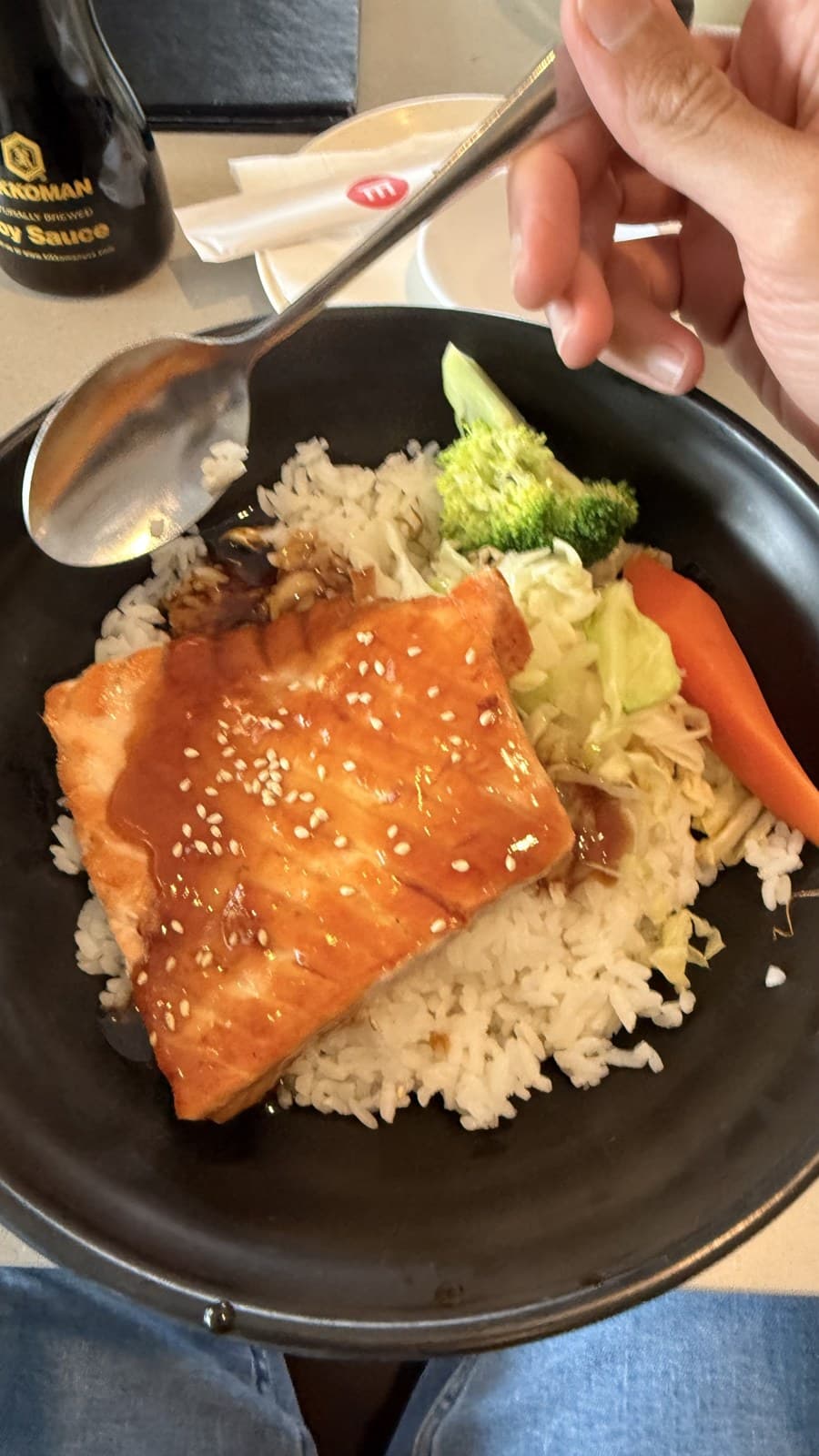
Refuelling after the climb — salmon, rice and greens. Recovery weeks are as much about the fork as the bike.
Run: two easy efforts, and a rearranged weekend
Tuesday was the only run with any bite — 6 x 2 minutes at VO2 max, logged as "Recovery week" and standing in for the run fitness test I skipped. It came out at 7.2km in 40:01 moving, a 5:31/km average across the recoveries, TSS 47.5. Short, sharp, done.
Saturday's run got rearranged around the climb. It was written as a short run-off-the-bike for Sunday, but with the Cypress Challenge taking that slot I moved it up and turned it into a standalone Aerobic Endurance Run — the plan called it a "nice steady social run in Z1–Z2," and that's what it was: 9.0km in 49:21 at 5:28/km, plus a couple of strides at the end to keep the legs honest. 59.8 TSS against a planned 45. Nothing heroic, which was the point in a week like this.
Swim: two short sessions, and a skipped test
Swimming stayed light and, per usual, imperfect. Monday was a recovery swim — a pull-heavy Z2 set on the plan, meant to be 2.2km. I got 1.5km in and called it: my note was that "the folks in the lane were just too fast," so the easy swim never really stayed easy and I cut it rather than turn a recovery day into a race. 24:23 in the water, 48.6 TSS.
Friday was the "Tortoise & The Hare" set, where the plan had a CSS test — the swim equivalent of a threshold test — bolted on. I skipped the test and just swam the set: 2.4km in 42:41, about 1:47/100m, 67.7 TSS. That's the second test of the week I ducked, and I'll be honest that the swim is still the discipline I under-serve. On a recovery week it doesn't cost much. In the build weeks ahead I need the CSS number to set my pace zones properly, so this is a test I'll actually have to sit down and do.
The rest of the week was two short strength sessions (Monday and Friday) and — for once — a full rest day on Wednesday. After finishing the previous week at TSB -31.7 with no day off, taking the rest day as written was the single most valuable thing I did all week.
Where this leaves me
A recovery week is only useful if you actually recover, and mostly I did: easy riding, easy running, a real day off, and my legs came back underneath me by the weekend. The Cypress Challenge was a deliberate exception — a hard, meaningful effort that doubled as a benchmark and reminded me the climbing legs are there. The aero setup stayed home for the climb — exactly right for 868m up a mountain — but the EZ Gains disc cover is finally on the Canyon now, and that matters more for what's coming: Tri-Cities is a flat, fast course where that kind of upgrade actually pays off, not a hill day like Sunday.
The one loose thread is the two skipped tests. Ducking the CSS and run tests on a recovery week is defensible, but I'm carrying stale threshold numbers into the next block because of it. Next week the plan builds again toward Tri-Cities — and before it does, I owe myself the pool test I keep avoiding.
Wondering where this fitness would place you?
See how a block of training like this would stack up against the historical field at Ironman 70.3 Washington Tri-Cities, or read the full breakdown of what it actually takes to earn a 70.3 Worlds slot.